
T-cell Biology, PI3K Signaling, Immune Microenvironment
B.S., Biochemistry, Purdue University Fort Wayne, 2023
M.D., Indiana University School of Medicine (In Progress)
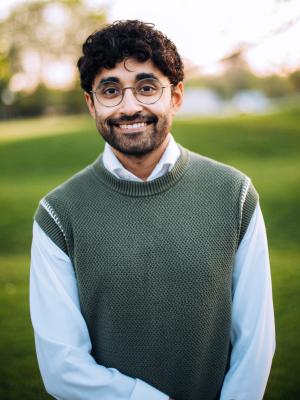
Varun graduated from Purdue University Fort Wayne with a B.S. in Biochemistry in 2023. During this time, his studies of Mycobacterium smegmatis as a model for Mycobacterium tuberculosis in the laboratory of Jaiyanth Daniel, Ph.D., sparked his interest in research. In this laboratory, his research primarily focused on investigating novel carbon nanomaterials and their effects on mycobacterial growth and other clinically relevant phenotypes. His work in the Daniel laboratory introduced him to the central role of the human immune system and the immune microenvironment in regulating disease.
Following this, Varun sought to expand his understanding of immunology by joining the laboratories of David DeNardo, Ph.D., and Brett Herzog, M.D., Ph.D., at Washington University School of Medicine in St. Louis. There, he also worked under the mentorship of Liang-I Kang, M.D., Ph.D., studying the tumor microenvironment (TME) in the contexts of metastatic pancreatic ductal adenocarcinoma and non-small cell lung cancer. His research focused on how various players in the TME, including diverse immune and stromal cell populations, interact to modulate tumor niches. This experience inspired him to connect his research interests with his passion for patient care.
In pursuit of this passion, Varun joined the Indiana University School of Medicine, where he has completed the first two years of medical training. He is now pursuing his Ph.D. under the supervision of Dr. Pamela Schwartzberg (NIAID) and Professor Klaus Okkenhaug (University of Cambridge). His research focuses on T lymphocytes, a crucial component of the immune system, and the role of PI3K signaling in their function. In the future, Varun hopes to pursue a career as a physician-scientist, working to leverage our understanding of cell signaling and the immune microenvironment to develop novel therapeutics to treat disease.
Dr. Pamela Schwartzberg (NIAID) and
Prof. Klaus Okkenhaug (Cambridge)