
Neural organoids & regenerative medicine; Biomaterials-guided circuit repair; Single-cell genomics & computational neuroscience
B.S.H., Symbolic Systems, Art History Minor, Stanford University, 2026
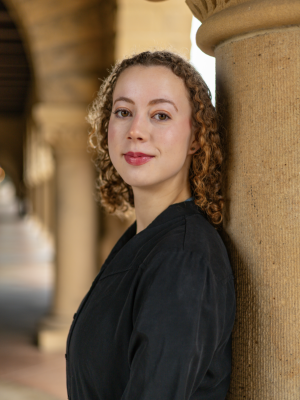
Kristine graduated from Stanford University with a B.S.H. in Symbolic Systems, focused on neural tissue engineering, and an M.A. in Public Policy. Through coursework and research spanning stem cell biology, computational neuroscience, bioethics, and translational medicine, she became interested in how engineered human neural systems can help explain and repair the circuits that fail in neurodegenerative disease.
At Stanford, Kristine worked in the Heilshorn Lab on patient-derived iPSC neural systems, including 2D hiPSC-derived deep cortical neurons and 3D neuroepithelial organoids embedded in engineered hydrogel environments. Her research used stem cell culture, hydrogel-based tissue engineering, immunocytochemistry, cryosectioning, qPCR, and analysis of early neural fate dynamics across patient-specific lines. She also worked in the Wagner Lab on memory-based prospection using computational, neuroimaging, and eye-tracking approaches, and as a neurolaw research fellow at the Center for Science & Law, where she applied statistics and data systems to questions at the interface of neuroscience, law, and policy.
Through the NIH Oxford-Cambridge Scholars Program, Kristine will work with Dr. Yun (Renee) Zhang at the NIH/NLM and Prof. Dame Molly Stevens at the University of Oxford to develop biomaterials-guided neural organoid and transplantation platforms for neurodegenerative disease. She is particularly interested in combining scaffold design, organoid engineering, and single-cell genomic characterization to understand how engineered tissue architecture can guide neuronal differentiation, axonal alignment, and circuit integration, with a long-term focus on dopaminergic circuit repair in Parkinson's disease. She hopes to build a research program that connects regenerative medicine, computational biology, and responsible biomedical innovation.
Dr. Yun (Renee) Zhang (NLM) and Prof. Dame Molly Stevens (Oxford)